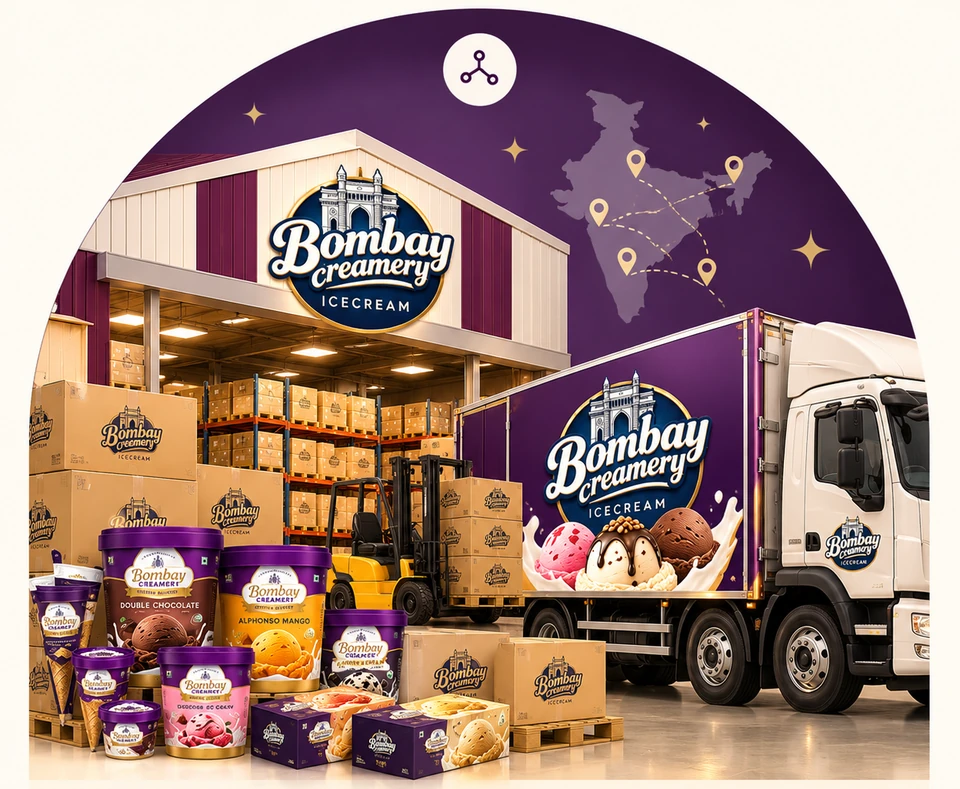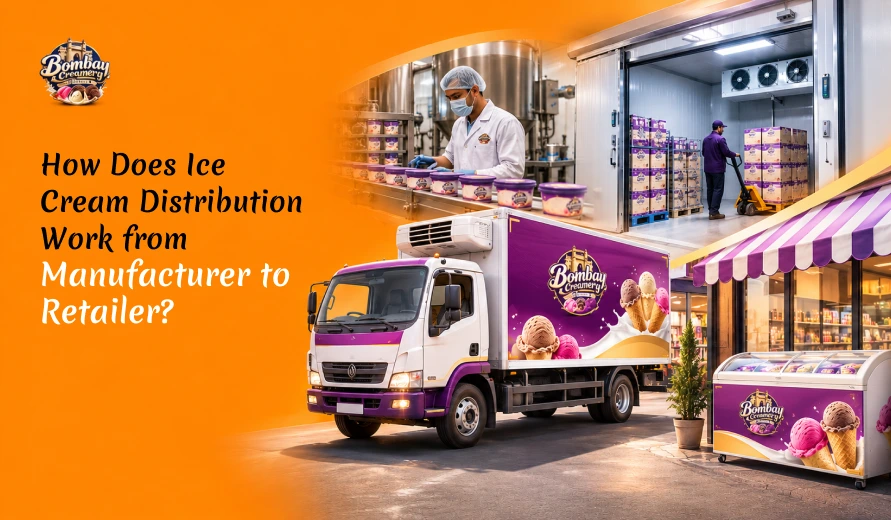
Ice cream distribution connects the brand, distributors, dealers and retail stores that make products available to customers. It involves more than moving products from one place to another. Businesses also need to manage stock, arrange frozen storage, coordinate orders and deliver products to retail points.
For anyone planning an ice cream business, understanding the ice cream distribution process is important. It helps explain the responsibilities of an ice cream supplier, dealer and distributor, and how each plays a role in supplying ice cream products to the market.
Understanding the Ice Cream Distribution Process
The ice cream distribution process involves different business operations that help products reach retail stores. A distribution network may include the brand, a distributor managing a defined territory, dealers supplying local shops and retailers selling products to customers.
Each business has a different responsibility:
- Brand: Provides the products and defines the commercial and supply arrangements.
- Distributor: Manages product supply across an assigned territory.
- Dealer: Stocks products and supplies local shops, cafés and other retail businesses.
- Retailer: Keeps products available for customers through shops, supermarkets and other retail points.
The exact arrangement depends on the business model and the terms agreed between the parties.
Role of the Manufacturer and Ice Cream Brand
The manufacturer or brand is the starting point of the product supply network. It provides the ice cream products that are made available through distributors, dealers and retailers.
Choosing the right ice cream brand is an important decision for anyone planning to enter this business. Retailers and distribution partners should understand the product range, supply arrangements and commercial terms before starting.
Bombay Creamery is a dairy ice cream brand announced by Reliance Consumer Products Limited (RCPL). The brand is positioned as an accessible premium ice cream option made with real dairy cream.
Its announced product range includes five formats:
- Cones: Handheld ice cream products.
- Cups: Single-serve products.
- Tubs: Larger packs for sharing and family use.
- Bars: Convenient coated ice cream products.
- Sticks: Handheld ice cream products.
These formats offer different ways to serve customers through retail stores and other outlets. The available flavours, pack sizes and prices should be confirmed through the applicable product and supply arrangements.
How Distributors Manage Ice Cream Supply
An ice cream distributor manages the supply of products across a defined territory. This role is suitable for established businesses that have the resources and reach to manage a wider distribution network.
A wholesale ice cream distributor may be responsible for coordinating supply, managing stock and working with dealers and retailers.
Some important responsibilities include:
Stock planning: Distributors need to plan how much stock is required for the retail points they serve. Proper planning helps avoid shortages and unnecessary stock accumulation.
Order coordination: They need to manage orders from dealers and retail businesses and coordinate the required supply.
Frozen storage: Ice cream products need suitable frozen storage while they are held before delivery. Storage capacity should match the amount of stock being managed.
Territory management: Distributors need to understand the area they serve and how many retail points they can supply properly.
Retail relationships: Maintaining good communication with dealers and retailers helps manage regular orders and supply requirements.
These responsibilities help keep the distribution process organised.
How Ice Cream Products Reach Retail Stores
After the distribution arrangement is established, dealers and distributors coordinate the supply of products to local retail businesses.
A dealer may stock ice cream products and supply them to shops, cafés and other retail points in a particular area. A distributor may manage supply across a wider territory through dealers and retailers.
The process generally involves:
- Planning stock: Estimating the quantity of products needed by retail customers.
- Coordinating orders: Collecting orders and arranging the required supply.
- Storing products: Keeping stock in suitable frozen storage before delivery.
- Arranging delivery: Supplying products to shops and cafés in the area.
- Managing inventory: Keeping track of available stock and upcoming requirements.
The actual supply process, ordering frequency and product availability depend on the commercial arrangement confirmed with the brand.
Why Frozen Storage and Delivery Matter
Frozen storage is an important part of the ice cream business. Products need suitable storage arrangements while they are kept in stock and before they reach retail stores.
A dealer or distributor should consider the following requirements:
- Cold storage capacity: The available freezer or cold-storage space should be suitable for the stock being handled.
- Temperature control: Reliable cooling arrangements are important for storing frozen products.
- Backup power: Backup power may be needed to maintain cooling during power interruptions.
- Delivery arrangements: Businesses should have a suitable plan for supplying products to shops and cafés.
- Stock management: Regular inventory checks help businesses understand their available stock and supply needs.
The exact equipment and temperature requirements should be confirmed for the actual business arrangement.
Wholesale Ice Cream Supply and Retail Business
Wholesale ice cream supply allows distributors and dealers to supply products to different retail businesses. These may include local shops, supermarkets, cafés and other retail points.
Before starting wholesale ice cream operations, businesses should understand their local market and delivery capacity.
Some important points to consider are:
- The number of shops and cafés in the selected area.
- The potential retail customers for the product range.
- The available frozen storage capacity.
- The delivery distance and number of outlets that can be served.
- The working capital required for stock and daily operations.
- The pricing, margins, minimum orders and payment terms agreed with the brand.
A business should review these details before making a commitment. Investment, dealer pricing, margins, minimum orders and territory arrangements should be confirmed in writing.
Choosing the Right Ice Cream Distribution Opportunity
People interested in the ice cream business can consider different ways to work with a brand. The right option depends on their business experience, available resources and the type of work they want to manage.
Business Model
Main Responsibility
Suitable For
Franchise
Running a branded ice cream outlet
Entrepreneurs who want to serve customers directly
Dealership
Stocking and supplying products to local shops
Retailers and traders with frozen storage
Distributorship
Managing product supply across a defined territory
Established distribution businesses
These models have different responsibilities and requirements. A dealership focuses on local retail supply, while a distributorship manages supply across a wider territory.
For a Bombay Creamery business enquiry, applicants can share their location, preferred business model and existing business or storage details. The team can then discuss the opportunity and applicable requirements.
Steps to Start an Ice Cream Distribution Business
Starting an ice cream distribution business requires planning and a clear understanding of the commercial arrangement.
Here are some basic steps to follow:
- Choose an ice cream brand: Review the brand, its product formats and the available business opportunities.
- Select your territory: Identify the city or area you want to serve.
- Check your infrastructure: Review your frozen storage capacity and delivery arrangements.
- Understand the commercial terms: Confirm investment, product availability, minimum orders, pricing and payment conditions.
- Submit an enquiry: Share your business details and preferred location with the brand.
- Review the agreement: Check the terms and documents before making any payment or starting operations.
For Bombay Creamery, the enquiry process includes discussion, eligibility review and a written agreement before the business setup and first supply are arranged.
Conclusion
Ice cream distribution involves product supply, stock planning, frozen storage, order coordination and delivery to retail businesses. Distributors manage supply across a defined territory, while dealers focus on supplying local shops and cafés.
Anyone planning to enter the ice cream business should review the product range, storage requirements, delivery capacity and commercial terms before choosing a business model. Understanding these responsibilities helps businesses plan their operations and manage their supply network.
Frequently asked questions
How does ice cream distribution work?
Ice cream distribution involves managing product supply, stock, frozen storage and delivery through distributors, dealers and retailers.
What does an ice cream distributor do?
An ice cream distributor manages product supply across a defined territory and coordinates with dealers and retailers.
What is the difference between an ice cream dealer and a distributor?
A dealer generally supplies products to local shops and cafés, while a distributor manages supply across a wider territory.
What storage facilities are needed for an ice cream distribution business?
A business generally needs suitable frozen storage, reliable temperature control and backup power where required.
Which ice cream formats are included in the Bombay Creamery range?
The five announced formats are cones, cups, tubs, bars and sticks. Flavours, pack sizes and prices are not listed on the website.
This article gives general information only. It is not financial, legal or tax advice, and it does not state the terms of any Bombay Creamery opportunity. Terms are confirmed in writing.