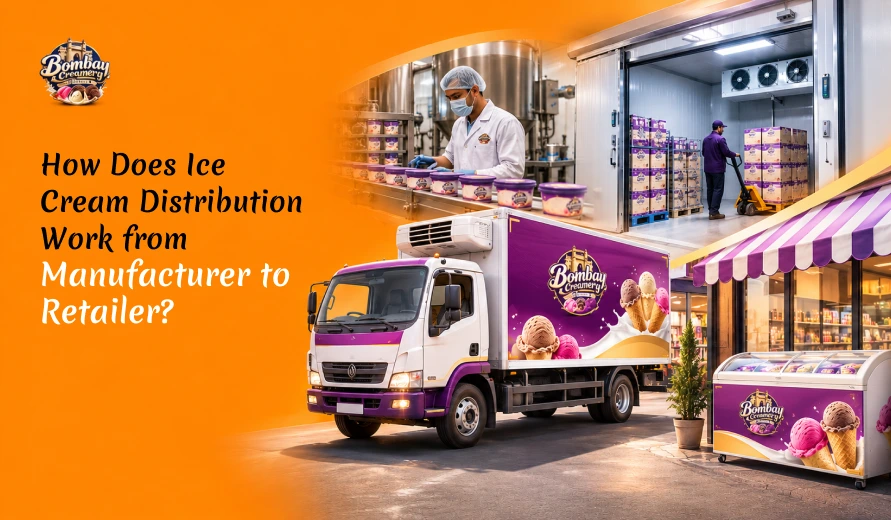
Short answer: a distributorship means managing ice cream supply across a wider territory, serving dealers and retailers. It needs warehousing, a cold chain, delivery logistics and working capital. This guide covers what to assess and what to confirm in writing.
Distribution is the quiet engine of the ice cream trade. It moves frozen products from the brand to hundreds of shops, and it only works when storage, transport and planning all hold together. This guide covers the main points for anyone considering the role.
What a distributor does
A distributor generally manages product supply across a defined territory, through dealers and retailers. The work usually includes:
- Planning stock based on demand.
- Coordinating supply across the area.
- Managing inventory and handling products in the cold chain.
- Coordinating deliveries and keeping dealer and retailer relationships in good order.
- Monitoring stock movement and operational performance.
See the distributorship page for how we describe this route.
Who it may suit
Distribution suits established businesses that already work with FMCG or frozen products and have warehousing, logistics and people in place. It is a bigger undertaking than a dealership, which usually supplies a smaller local area.
Business capacity to think about
- Working capital to hold and move stock.
- Warehousing and cold-chain operations.
- Logistics and delivery management.
- A capable operations or sales team.
- The registrations and licences that apply to your business.
Territory and network planning
Territory planning usually looks at market demand and the population an area covers, the retail and dealer networks already in place, warehousing and delivery capacity, and the practical supply routes and operating costs involved. A territory is only yours if your written agreement says so. Never assume one.
Warehousing and cold chain
Frozen stock needs suitable storage, equipment that holds temperature, a way to monitor it and backup power. It also needs careful handling, good hygiene, stock rotation and insulated transport where appropriate. We cover the basics in our guide to storage, freezers and cold chain. Exact specifications depend on the operating model and must be confirmed in writing.
Terms to confirm in writing
- Initial investment and working capital.
- Product pricing, margins and payment terms.
- Minimum orders and supply frequency.
- Territory allocation and exclusivity, if any.
- Storage and infrastructure specifications.
- Product availability and supply arrangements.
- Account management, marketing, training and support, if offered.
- Agreement duration, obligations and termination.
Key takeaways
- A distributor coordinates supply over a wider area through dealers and retailers.
- Capacity in storage, logistics and people matters more than enthusiasm.
- Get territory, pricing and obligations in writing.
Ready to talk? Apply for distributorship or contact the team.
Compare routes in franchise vs dealership vs distributorship, and see the distributorship page for the opportunity overview.
This article gives general information only. It is not financial, legal or tax advice, and it does not state the terms of any Bombay Creamery opportunity. Terms are confirmed in writing.