
Distributorship opportunity
Bombay Creamery Ice Cream Distributorship
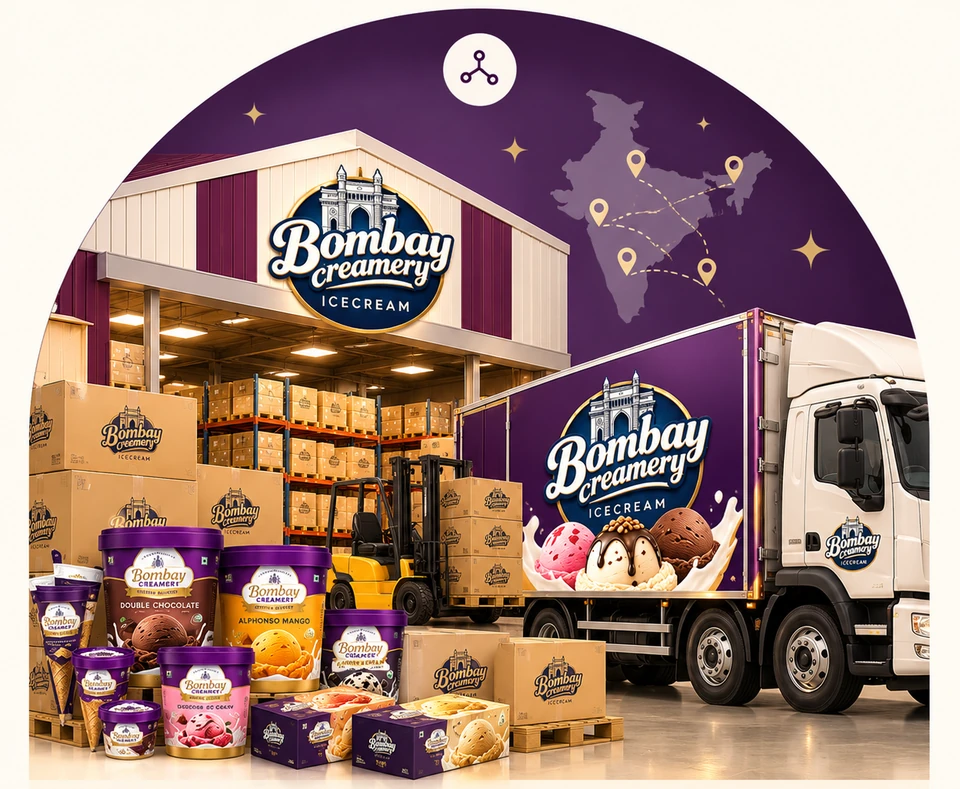
Distributorship generally involves managing product supply across a defined territory, through a network of dealers and retailers. Here is what the role covers, what to prepare and what to confirm in writing before you commit.
Overview
What is a distributorship?
A distributor coordinates supply over a wider area, through dealers and retailers. This website collects enquiries; it does not itself appoint distributors.
Not sure how this differs from a franchise or a dealership? Read the comparison guide, or see the franchise and dealership pages.
Who it may suit
Is this for you?
General considerations only. They are not guaranteed eligibility criteria.
FMCG or frozen-food distribution
Established distribution businesses used to supplying retail at scale.
Warehousing and cold chain
Businesses with suitable warehousing and cold-chain capacity.
Logistics and inventory
Operators with delivery logistics and inventory-management processes.
Dealer and retailer network
Businesses with an existing network, or the ability to build one.
Distributor responsibilities
The typical work involved
These are general responsibilities, not confirmed contractual obligations. The actual duties are set out in the agreement you receive.
Plan stock
Plan stock levels based on demand.
Coordinate supply
Coordinate supply across a defined area.
Manage inventory and cold chain
Manage inventory and handle products in the cold chain.
Coordinate deliveries and relationships
Coordinate deliveries and keep dealer and retailer relationships in good order.
Monitor performance
Monitor stock movement and operational performance.
Confirm the details
Responsibilities vary with the operating model. Ask for them in writing.
Territory and network planning
How an area may be assessed
Planning a territory may take these factors into account.
Demand and coverage
Market demand and the population an area covers.
Existing networks
Retail and dealer networks already in place.
Warehousing and delivery capacity
Whether storage and delivery capacity can serve the area.
Routes and operating costs
Practical supply routes and what it costs to run them.
No city, state, district or pin code is listed as available on this page. Territory allocation, and any exclusivity, must be confirmed in writing.
Warehousing and cold chain
Frozen stock, from warehouse to retailer
At distribution scale, the cold chain is the business. Here is what it generally covers.
- WarehouseStock received into frozen storage.
- Cold storageHeld at temperature and rotated.
- Insulated transportMoved along planned routes.
- Dealers and retailersHanded on, still frozen.
Warehouse and frozen storage
Suitable warehouse space and frozen-storage capacity for the stock you hold.
Freezers and refrigeration
Appropriate freezers and refrigeration equipment, in good working order.
Temperature monitoring
Routine checks and records to show storage stays cold.
Reliable backup power
A plan for power cuts so stock is protected.
Safe handling and hygiene
Clean storage and careful handling at every step.
Inventory and stock rotation
Tracking stock and rotating it so older stock moves first.
Insulated transport
Delivery vehicles and insulated transport where appropriate.
Route planning
Planned routes and coordinated deliveries to dealers and retailers.
These are general considerations. Exact specifications depend on the confirmed operating model and are not set on this page. Confirm them in writing.
Business capacity
What larger-scale distribution takes
Distributing over a wider area is a bigger undertaking than supplying a few local shops. These are the general considerations. No minimum investment or staffing level is set on this page.
- Working capitalFunds to hold stock and run day-to-day operations.
- Warehousing and cold-chain operationsThe space, equipment and routines to store stock properly.
- Logistics and delivery managementThe ability to plan and run deliveries across an area.
- A capable operations or sales teamPeople to handle orders, stock and relationships.
- Relevant registrations and licencesThe registrations and licences that apply to your business.
How it works
From enquiry to supply
Submit an enquiry
Share your business and preferred territory.
Discuss the opportunity
Talk through the opportunity and your operating capacity.
Review suitability
Suitability, infrastructure and logistics are reviewed.
Receive terms in writing
Written commercial terms and agreement documents are shared.
Set up after approval
Setup and supply proceed only after the necessary approvals and agreement.
No response time or schedule is promised on this page. Each step depends on the brand’s confirmation.
Commercial terms
What to confirm in writing
These terms are not published here. Get each one confirmed in writing before any commitment.
Do not pay any amount until you hold a written agreement from the contracting company.
Initial investment and working capital
What you would need to put in, and what to keep in reserve.
Product pricing, margins and payment terms
The prices you buy at, what you may earn and when payment is due.
Minimum orders and supply frequency
How much you must order and how often supply runs.
Territory allocation and exclusivity, if any
The area covered, and whether any exclusivity applies at all.
Storage and infrastructure specifications
The warehouse, equipment and vehicle specifications that apply.
Product availability and supply arrangements
Which products you can supply and how supply is arranged.
Account management, marketing, training and support, if offered
Any support on offer, and who provides it.
Agreement duration, obligations and termination
How long it runs, what each side must do and how it can end.
Related guides
Read before you decide
General guidance that applies to any ice cream business. It is not Bombay Creamery terms or advice.
Ice Cream Distributor Capacity Checklist
A self-check of warehouse, vehicles, people and cash before you apply.
Ice Cream Cold-Chain Basics for Dealers
Storage, temperature checks and handling basics, with sources.
Building a Retail Network for Ice Cream
How a supply network is built one reliable delivery at a time.
Franchise vs Dealership vs Distributorship
Not sure which route fits? Compare the three side by side.
Questions
About the distributorship
Something else? Contact the team. Looking at a different route? See the franchise or dealership page.
What does a distributorship involve?
A distributor generally manages product supply across a defined territory, working through a network of dealers and retailers. The work can include planning stock, running warehousing and cold-chain handling, coordinating deliveries and monitoring stock movement. The actual role, range and terms depend on the arrangement confirmed in writing.
How much investment is required?
No investment figure is published on this website. It depends on the operating model, the stock you would hold, your warehousing and logistics set-up and the commercial terms. Initial investment and working capital must be confirmed in writing before you commit. No profit or return can be promised.
Which territories are available?
This website does not list any territory as available. Territory allocation, and whether any exclusivity applies, must be confirmed in writing with the authorised brand representative before you rely on it.
What warehouse and cold-chain facilities might be needed?
In general, a distributor needs warehouse and frozen-storage capacity, suitable freezers, temperature monitoring, backup power and insulated transport. Exact specifications depend on the confirmed operating model and must be confirmed in writing. They are not set on this page.
Can an existing FMCG distributor apply?
Yes, you can submit an enquiry. Existing distributors often already have warehousing, delivery and retailer relationships, but suitability is reviewed case by case and no acceptance can be promised. Terms and any conditions are confirmed in writing.
How is distributorship different from dealership?
A distributor usually covers a wider region and supplies dealers and retailers; a dealer typically supplies local retail points in a smaller area. The exact roles are defined in the written arrangement.
How can I apply?
Use Apply for Distributorship and choose distributorship as your business type, or message the team on WhatsApp. Terms are shared in writing, and you proceed only after the required approvals and agreement.